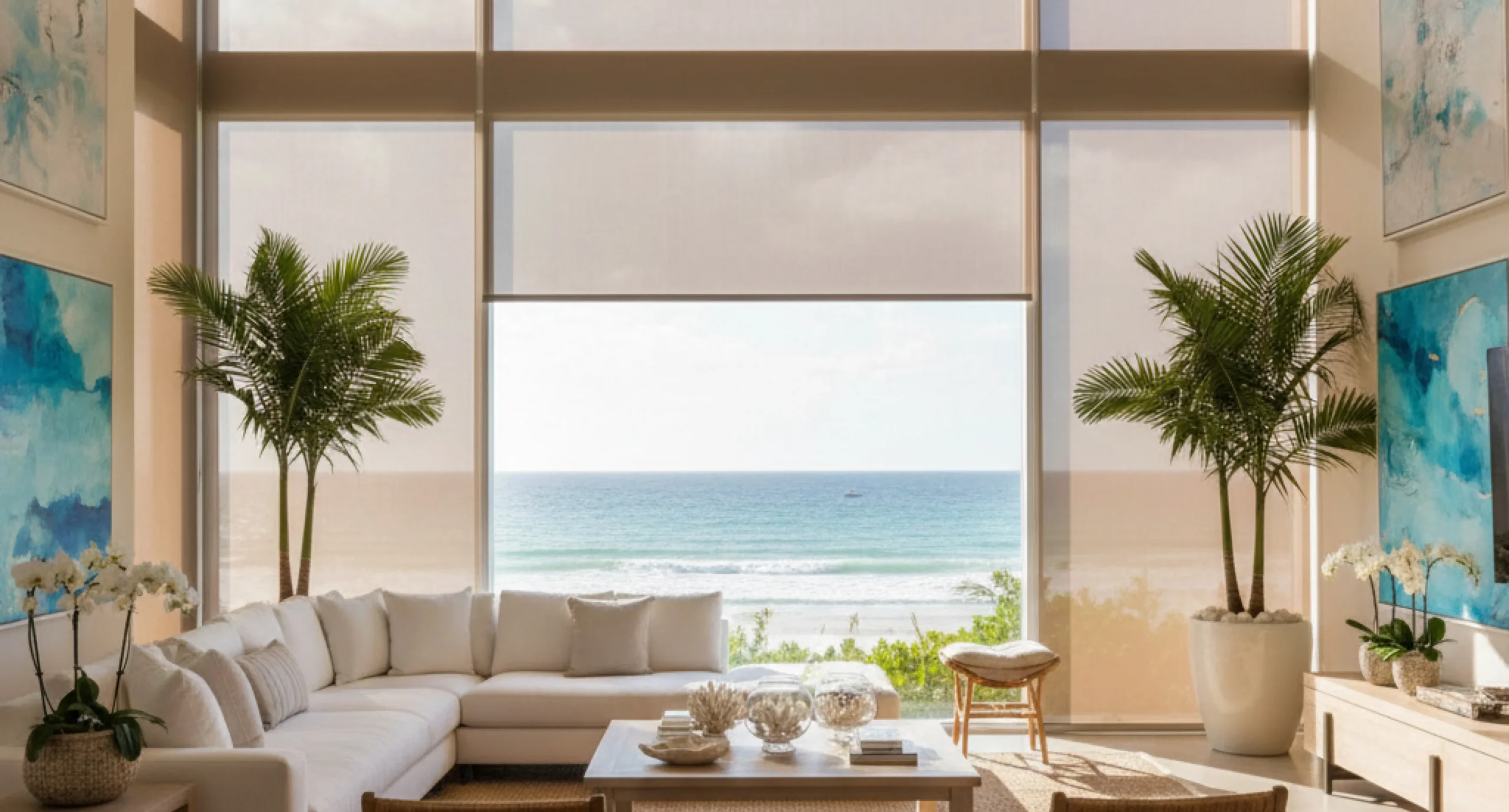
Cut the glare and the ultraviolet without giving up the water, the garden, or the view you bought the house for.
Ultraviolet damage is slow, permanent and almost never noticed until something is moved. Hardwood flooring bleaches in a band along the glazing line. A walnut cabinet front loses its depth over three seasons. Silk upholstery goes chalky on the side that faces the window and stays true on the other, which is the moment most people realise what has been happening.
Premium solar shades stop up to ninety-nine percent of ultraviolet light before it enters the room. The fabric is doing structural work rather than decorative work: a tightly engineered mesh that absorbs and reflects radiation at the glass, cutting both the fading and the radiant heat that follows it through.
What that protects is rarely the shade. It is the art on the opposite wall, the cabinetry specified to match the floors, and the upholstery that took eleven weeks to arrive.

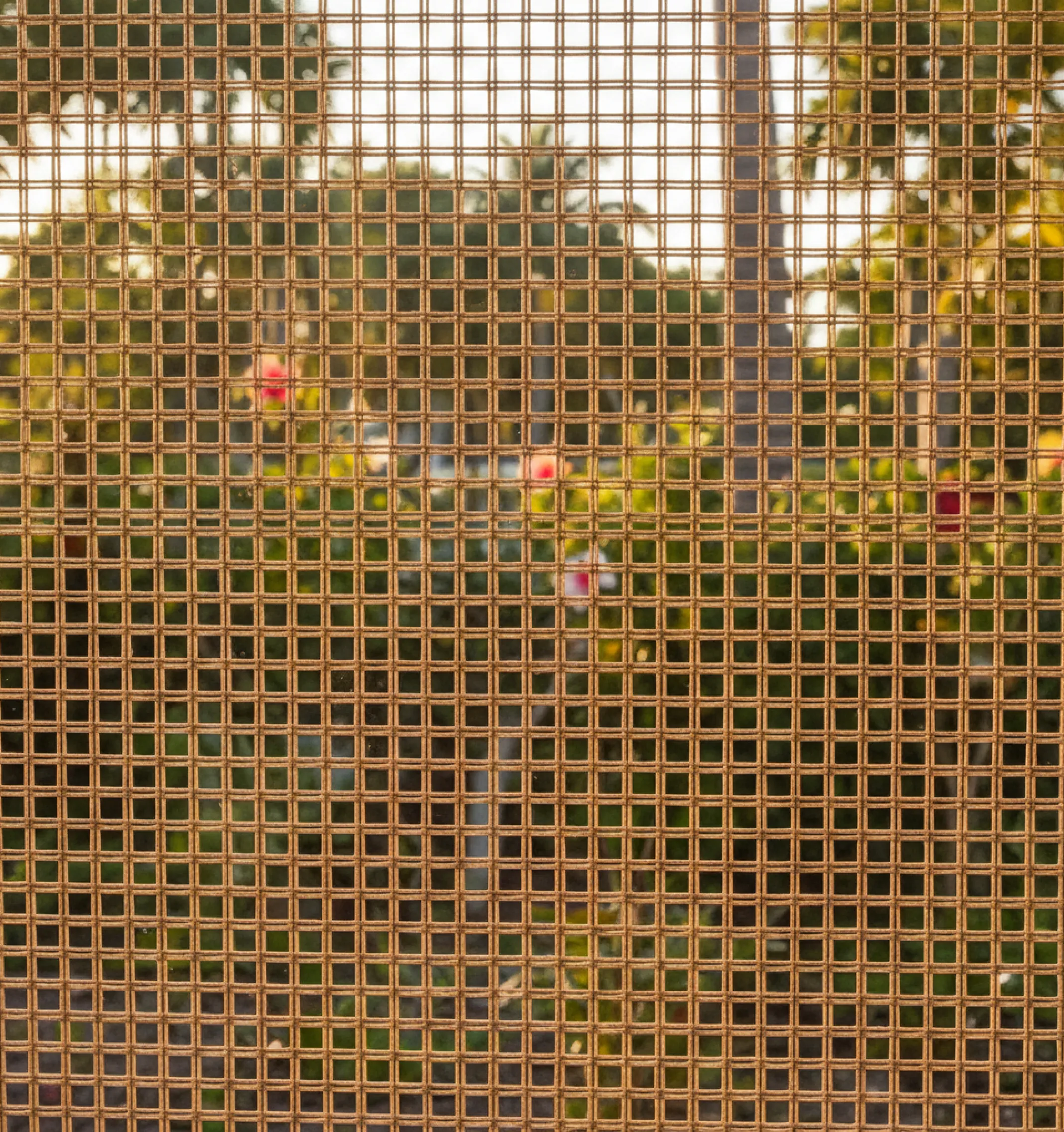
Every solar fabric carries an openness factor, expressed as a percentage from roughly one to ten. It describes how much of the weave is open space, and it is the single decision that determines whether you will be happy with the shade.
A one percent fabric is tightly woven. It blocks the most ultraviolet light, gives the strongest daytime privacy and cuts glare hardest, at the cost of some view clarity. A ten percent fabric is far more open, so the outlook stays sharp and the room keeps its brightness, but less is stopped at the glass. Three and five percent sit between the two and are where most Palm Beach specifications land.
The right answer changes room by room and wall by wall. A western elevation taking full afternoon sun over water usually wants one or three percent. A shaded north-facing room can carry five or ten without any glare problem at all.
Worth clarifying one point of confusion: solar screens Palm Beach County properties fit on the outside of the building are a different product, mounted externally and generally used on lanais and patios. Everything on this page is an interior treatment, made to the same standard as the rest of the collection and fitted inside the reveal.

Openness factor is impossible to judge from a sample card. The only reliable test is holding the fabric against the actual glass, at the actual window, looking at the actual view.
That is what the visit is for. A designer works through the house elevation by elevation, checking which walls take direct sun and at what hour, then holds candidate fabrics to each window so you can see exactly how much of the view survives at each density. Where a room is used in the evening as well as the day, we will usually recommend pairing a solar fabric with a blackout layer on a dual system rather than compromising on a single fabric that does neither job properly.
Bring the times of day you actually use each room to the conversation. It changes the specification more than anything else.
Custom solar shades are the ideal solution for rooms with intense, direct sunlight. They utilize specialized mesh fabrics to filter out harsh UV rays, reduce heat gain, and completely eliminate screen glare while preserving your outdoor view.
Yes. Premium solar shades block up to 99% of damaging ultraviolet rays. This provides a critical layer of protection that prevents expensive upholstery, artwork and real wood flooring from bleaching or cracking.
The openness factor refers to the tightness of the fabric weave, typically ranging from 1% to 10%. A 1% openness blocks more UV rays and offers more privacy, while a 10% openness provides a clearer view of the outdoors but filters slightly less light.
Solar shades provide excellent privacy during the day. However, at night, when the lights are on inside, people outside may be able to see in. For complete nighttime privacy, we recommend a dual-roller system pairing a solar shade with a blackout shade.
Yes. We offer fully motorized and smart-automated solar shades. Motorization is especially beneficial for large, hard-to-reach windows or for programming your shades to lower automatically during peak sunlight hours.
After your complimentary in-home design and measurement consultation, your bespoke solar shades will be custom-manufactured and professionally installed by our team, typically within 2 to 4 weeks.